
A North Carolina county’s landfill is polluting drinking water with toxic ‘forever chemicals’ Written by Cornelius Lewis

For tens of thousands of people in Robeson County, turning on the tap should not come with fear.
Yet today, the county is knowingly supplying drinking water contaminated with unsafe levels of toxic PFAS, also known as “forever chemicals.” These super durable compounds don’t break down easily in the environment or our bodies and have been linked to cancer, immune system harm, and other serious health risks.
And unless county leaders act immediately to stop the pollution and protect public health, SELC is prepared to take the county to federal court.
On behalf of Winyah Rivers Alliance and the St. Pauls Community Association for Progress, SELC has formally warned Robeson County that its ongoing contamination of the public water supply violates federal law and may endanger up to 66,000 people who rely on the countywide water system.
“Shocking and illegal”
“A county knowingly supplying drinking water that is highly contaminated with toxic PFAS to its residents is shocking and illegal and it needs to stop,” said Maia Hutt, senior attorney at SELC. “We’ve repeatedly urged the county to stop the landfill’s PFAS pollution and clean up its drinking water as required by law and for people’s health and safety. People in Robeson County deserve clean drinking water, just like families and communities everywhere.”
Recent testing paints a deeply troubling picture.
Contaminated water is not acceptable.
Sibyl Farr, Executive Director of St. Pauls Community Association for Progress
The county-owned Rocco Water Treatment Plant has the highest PFAS levels in finished drinking water of any treatment plant in North Carolina — and the highest concentration of GenX (a PFAS compound manufactured by Chemours) of any groundwater-based water system in the entire United States.
Tap water samples from homes within two miles of the Rocco Plant revealed:
- PFOA levels more than three times higher than the Environmental Protection Agency’s enforceable drinking water limit
- GenX concentrations, on average, are about three times higher than EPA’s limit — a limit the Trump administration has said it plans to abandon.
Every single home tested had unsafe levels of PFAS in its tap water.
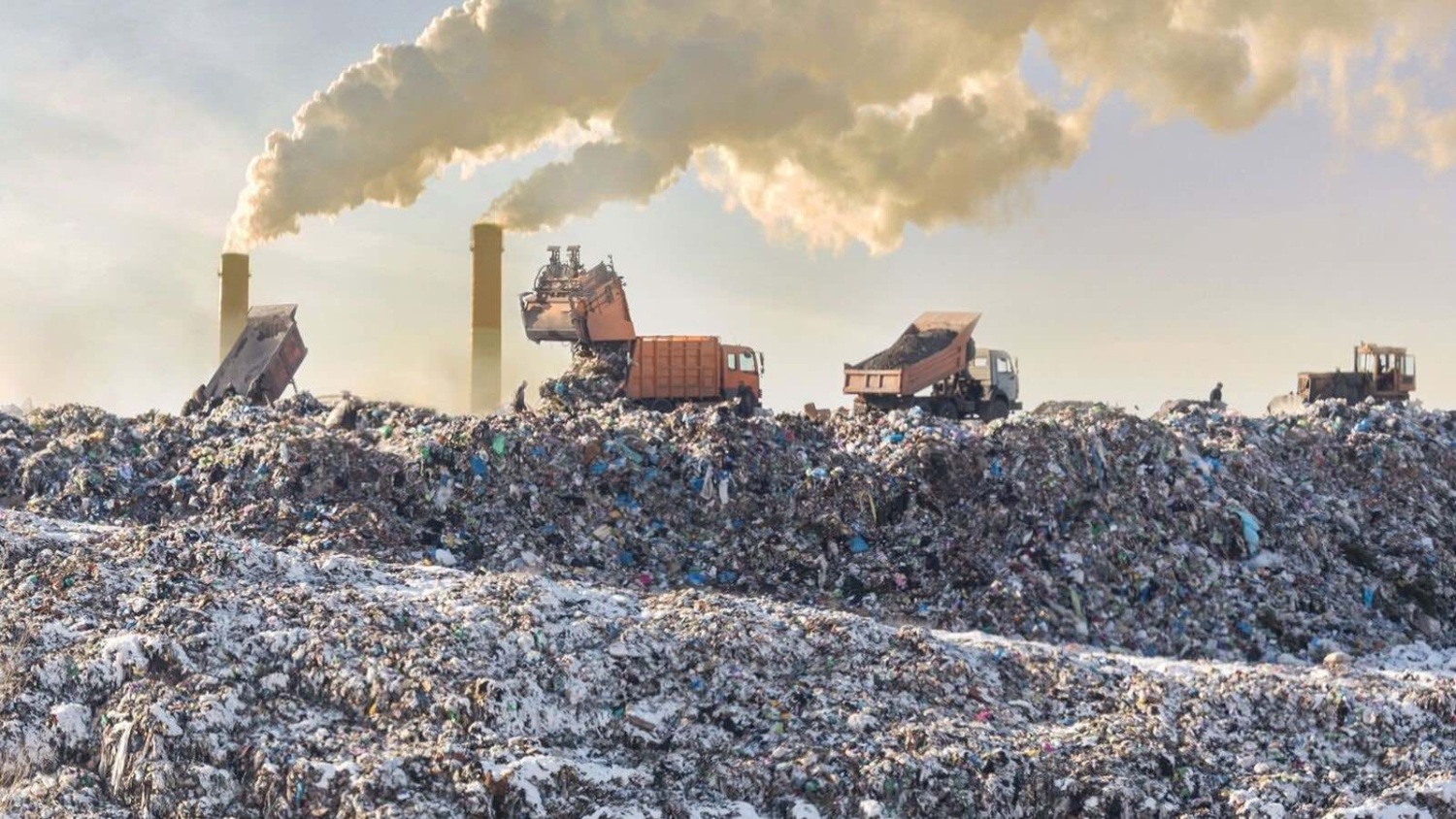
The likely source of the pollution is apparent: just across the street from the Rocco Plant, the County operates a 537-acre landfill with a history of contaminating groundwater and accepting waste from PFAS manufacturer Chemours.
Wastewater from the Robeson County Landfill, also called leachate, contains extremely high levels of PFAS. Groundwater beneath the landfill is also heavily contaminated. The Rocco Plant draws water from four public wells located within 4,500 feet of the landfill, and the plant’s equipment is not designed to remove PFAS before the water is distributed to homes, schools, and businesses.
Families deserve clean water
Community members have been raising alarms for months — but county leaders have failed to act.
“We are taking this step because we are concerned for the health and safety of our families and community, and our pleas for action have fallen on deaf ears,” said Sibyl Farr, executive director of the St. Pauls Community Association for Progress. “For our families, schools, churches, and businesses to thrive and be safe, we need clean water when we turn on our faucets. Contaminated water is not acceptable.”
In 2024, SELC filed and settled a similar lawsuit against North Carolina’s largest landfill. Our resulting agreement required the landfill operator to essentially eliminate toxic PFAS discharges to surface waters, address longstanding odor and air quality concerns, and provide community-led relief to this rural, predominantly Black and Latino neighborhood for the first time in decades.
Profits over people’s health
Robeson County operates 12 water treatment plants yet continues to rely on the contaminated Rocco Plant. Meanwhile, the county reports that its solid waste operations generated $3 million in profits in the 2024–25 fiscal year.
SELC, Winyah Rivers Alliance, St. Pauls Community Association for Progress, and community leaders have repeatedly urged county officials to take common sense steps, including:
- Providing alternative drinking water (i.e. bottled water) at no cost until county water is free of PFAS
- Replacing Rocco Plant water with clean water from another treatment plant
- Investing landfill profits and/or seeking funding through one of the state’s numerous funding programs for local governments to install treatment technology at Rocco Plant that can remove PFAS.
So far, the county has failed to act.
Pollution spreading beyond drinking water
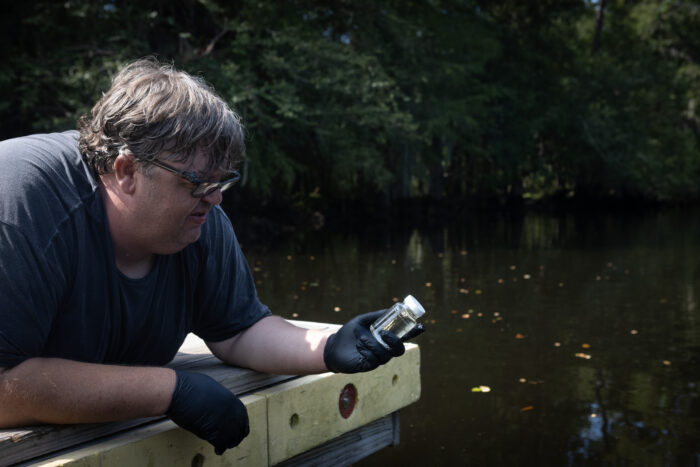
Lumber Riverkeeper
Jeff Currie II
collects water samples
to check for pollution.
(©Julia Rendleman)
The damage doesn’t stop at the tap.
PFAS from the landfill is also contaminating groundwater and streams that flow into the Lumber River — also called the Lumbee River — waters many families rely on for fishing and hunting.
“Not only is the landfill contaminating our drinking water, but it’s leaching into groundwater and streams that feed the Lumbee River,” said Jeff Currie, Lumber Riverkeeper at Winyah Rivers Alliance. “We know from fish advisories across the Carolinas that eating fish contaminated with PFAS is unsafe. It’s irresponsible and illegal for Robeson County to allow this pollution to continue.”
A long history of environmental injustice
The Robeson County Landfill sits in one of North Carolina’s most underserved, overburdened, and racially diverse counties. For decades, the county has made money by accepting waste from Chemours and other industries that manufacture or use PFAS.
State regulators first cited the county for violating environmental and public health laws at the landfill in 1993 — yet still allowed it to expand. Today, the landfill spans 537 acres just outside the Town of St. Pauls and continues to pollute nearby groundwater and Big Marsh Swamp, a tributary of the Lumber River.
Clean drinking water is not a luxury. It is a fundamental need — and Robeson County has a legal obligation and moral imperative to provide county residents with the clean water they deserve.
If county leaders won’t act, we’ll make sure the law will.